Contact electronics
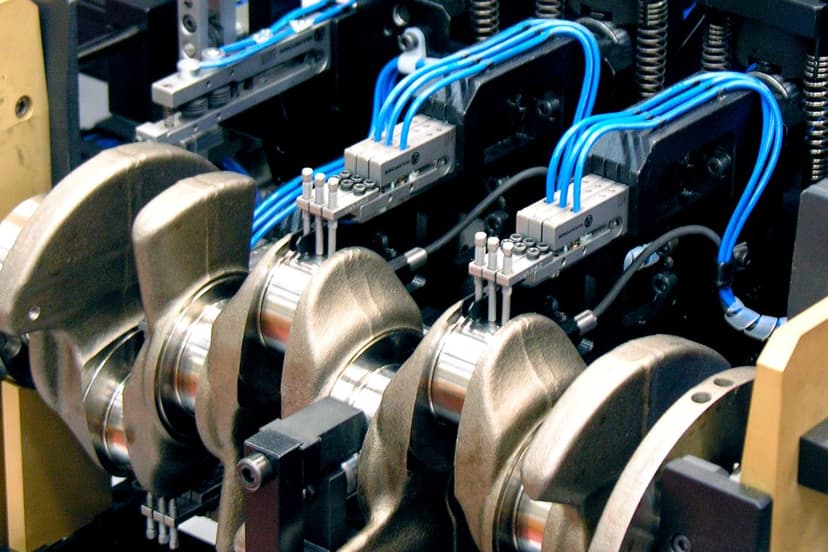
Electronic contact measurement: this is a system that converts the displacement of a physical probe from a measured part into an electrical output signal.
- Advantages of electronic contact meters over alternative measurement technologies:
- Electronic contact measurement allows wide measuring ranges, maintaining excellent linearity and thermal stability over the entire range.
- It is suitable for measuring parts taken off the production line and still wet
- Has very fast response times to changes in characteristics
- It offers a direct correspondence with the contact technologies used in the target laboratories or inspection departments (usually CMMs, roundness indicators
- It is a cost-effective technology compared to other measurement technologies
- Electronic contact gauges are robust, durable and highly reliable, suitable for use in the workshop or near machine tools
- Compact formats and miniaturised design possible
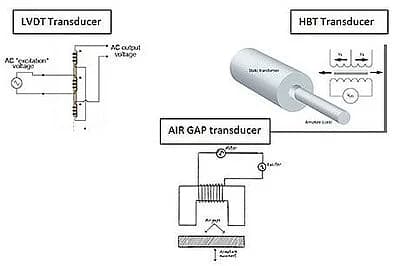
The system consists of a mechanical part that integrates an electronic circuit (transducer) capable of producing the variation of an electrical signal according to the movement of the touch probe. The electrical output is available for processing by an electronic unit, which digitises and processes it, providing a measurement value in numerical format and as a graph. The values can be transmitted as a digital output, via wired or wireless electronic transmission. The output can also be statistically analysed by the electronics unit. The output value can be used to compensate machine tools and keep production under optimal control. It can be sent to any other data acquisition network. Marposs designs its equipment and mechanical components using special methods to eliminate seizures as well as kinematic-related friction to produce long-lasting, backlash-free devices. This design slows or even prevents the effects of wear, which can reduce measurement quality. Marposs contact measuring devices exploit three main transduction principles: Linear Variable Differential Transformer (LVDT): ): a special arrangement of a main excited coil and two secondary coils is correctly coupled to a magnetic core to output an electrical signal. The output varies depending on the position of the core relative to the main and secondary coils. It is a special arrangement of an excited main coil and two secondary coils. HBT (Half Bridge Transducer) or DVRT (Differential Variable Reluctance Transformer): The displacement of a magnetic core causes an imbalance between two inductive impedances. Transduction technology presents a simpler wiring configuration, with a slight variation in performance, in terms of stability, depending on the size of the transducers and the range covered. Air Gap: an inductive type system transforms the mechanical displacement of a moving ferromagnetic element relative to a fixed coil into a change in inductance. Recent developments have made Air Gap technology very attractive, improving the linearity and performance stability of Air Gap transducers. Thanks to the advanced technology, the Air Gap system has proven to be very advantageous for compact applications, where space can be a problem for LVDT and HBT transducers.
Lorem ipsum
Lorem ipsum dolor sit amet, consectetur adipiscing elit, sed do eiusmod tempor incididunt ut labore et dolore magna aliqua. Ut enim ad minim veniam, quis nostrud exercitation ullamco laboris nisi ut aliquip ex ea commodo consequat. Duis aute irure dolor in reprehenderit in voluptate velit esse cillum dolore eu fugiat nulla pariatur. Excepteur sint occaecat cupidatat non proident, sunt in culpa qui officia deserunt mollit anim id est laborum.